Laser Cutting Acrylic & Plywood
High-precision contour cutting and complex geometries for your projects in Graz. We transform flat material sheets into three-dimensional objects with a level of accuracy that only modern CO2 laser systems can provide.
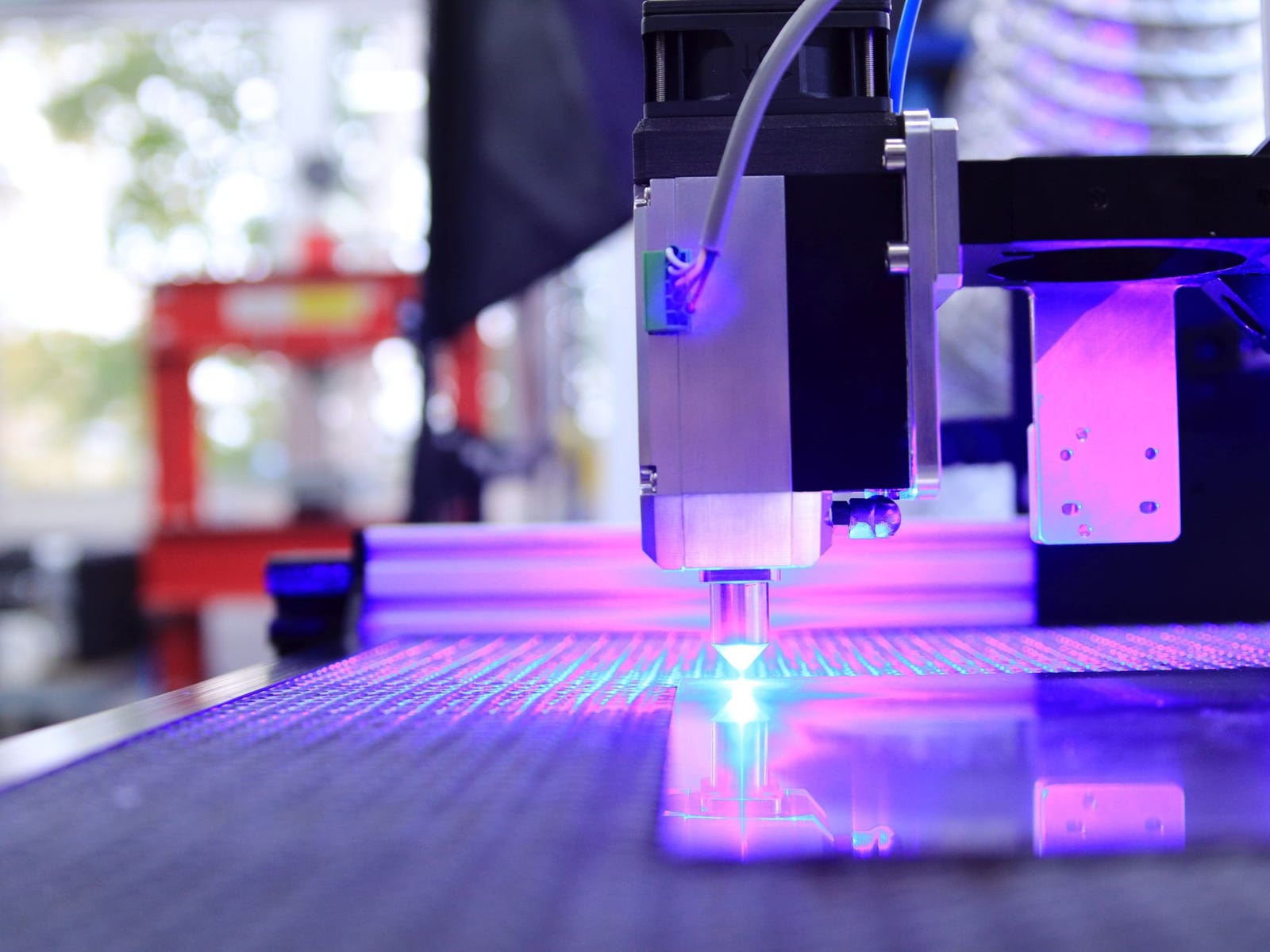
Laser cutting is a thermal separation process where a highly concentrated beam of light locally melts or evaporates the material. Unlike mechanical milling, this technology allows us to realize extremely fine details and sharp internal angles that would be unreachable with physical drill bits. In our Graz workshop, we employ this technique to produce both functional technical components and aesthetic design objects.
Particularly with acrylic glass (PMMA), the laser offers the advantage of the so-called "polished edge." Since the material melts during the cutting process, smooth, glassy cut surfaces are created that require no further manual post-processing. With plywood, on the other hand, a characteristic dark brown to black charred edge is created, giving the objects a distinct depth and an industrial charm.
The Process: 4 Steps to Your Component
Who We Work For
Our client base encompasses a wide spectrum of demanding professionals. Architects and Interior Designers utilize our services for architectural scale models or custom room dividers. Small Businesses have high-quality displays, holders, or branding elements manufactured by us to convey a professional corporate image.
Product Developers and Makers also value the ability to bring prototypes into series quickly and cost-effectively. Whether it is a single precise plastic plate for a technical application or a series of decorative wooden elements for a corporate event, we provide the technical infrastructure to realize your ideas.
Technical Implementation and Workflow
We work with a combination of CO2 and fiber lasers, with the CO2 system being the primary tool for organic materials such as wood and plastics. The process is fully automated: the file is translated into G-code, which tells the laser head exactly where to cut (high power) and where to only mark or engrave (low power).
A critical point is material tension. We ensure that the sheets are correctly fixed to avoid warping during the heating process. Especially with acrylic glass, cooling and the extraction of fumes are essential, which is ensured in our 65 m² workshop by a professional ventilation system.
What You Should Prepare for the Order
To start your project without delays, we require a clean technical foundation. The most important prerequisite is a vector file. Raster graphics (JPG, PNG) cannot be cut directly because the laser requires a mathematical path, not a pixel image.
- File formats: Preferably .svg, .dxf, or .ai (Version 8 or CS).
- Lines: All cut lines must be present as closed paths.
- Colors: Please designate cut lines (e.g., Red) and engraving lines (e.g., Black) using different colors.
- Scale: The file must be created in a 1:1 scale.
If you do not have vector data, we offer professional support. Please visit our page for Vectorization & Layout, where we convert your sketches into machine-readable data.
The Result: What You Receive
Upon completion of production, you receive your components in protective packaging to avoid scratches on acrylic glass or splinters on wooden edges. We deliver the parts exactly according to your specifications.
- Precisely cut parts made of acrylic or plywood.
- Clean, sealed edges (smooth for acrylic, dark for wood).
- Upon request: The finalized vector file after full payment.
- A photo of the finished product before handover for quick coordination.
Delivery Times and Deadlines
The average delivery time in our workshop is 5 to 7 working days. This timeframe includes data verification, material procurement (if not in stock), and the actual production process.
For urgent projects, we offer an express service. Please note that express orders incur a surcharge of 30% on the total price. All deadlines are bindingly fixed after receipt of the deposit and final approval of the layout.
What is NOT Included in Our Service
To ensure the quality of our work and the safety of our machinery, there are clear limits. We do not process materials containing chlorine, such as PVC. The combustion of PVC releases highly toxic chlorine gas, which endangers health and destroys the machinery's optics through corrosion.
Similarly, we do not produce large-scale facade signs or extremely thick material plates that exceed the maximum penetration depth of our lasers. We focus on precise components within our working area of 900 x 600 mm.
Pricing and Value Added Tax
Our pricing is calculated transparently based on the cutting length (linear meter) or the number of pieces. The prices indicated in the following table are net prices plus the statutory VAT of 20%.
A minimum order value of 30 € applies to all orders. Final billing is based on actual material consumption and required machine time. For B2B customers, we offer a payment term of 14 days after invoicing.
| Material / Service | Price (Net) | Price (incl. 20% VAT) | Unit |
|---|---|---|---|
| Plywood up to 4mm | 3.75 € | 4.50 € | per linear meter |
| Acrylic up to 5mm | 5.17 € | 6.20 € | per linear meter |
Detailed Scope of Service
- Contour cutting of complex shapes in acrylic and wood.
- Cut-outs and breakthroughs for technical components.
- Combination of cutting and surface engraving on a single part.
- Material consultation for the optimal choice between acrylic and wood.
- Technical feasibility check of the provided file.
- Careful packaging of individual components.
For further information on choosing the right material, we recommend our Choosing the Right Material guide. The legal framework for our custom manufacturing can be found in our Terms and Conditions.
Frequently Asked Questions about Laser Cutting
Can I bring my own materials?
Generally yes, provided we can verify the material in advance. We must ensure that the material is laser-compatible and does not release dangerous gases (as with PVC). Liability for material defects rests with the customer.
How precise is the laser cut?
Our CO2 lasers operate with a tolerance in the range of fractions of a millimeter. The cut width (kerf) is typically around 0.1 to 0.3 mm, depending on material thickness and power settings.
What is the maximum thickness of acrylic you can cut?
In our standard offer, we provide cuts up to 5 mm. For thicker materials, mechanical processing or a more specialized process is often necessary, as the cut edge can become conical at higher thicknesses.
Is the wood burnt after cutting?
When laser cutting plywood, a dark edge is inevitably created due to the heat. This is a characteristic feature of the process. The surface of the wood remains untouched, provided no engraving is requested.
Do you have questions about your project or need an individual quote?
Request Project Now